

U.S. healthcare system pinched by nursing shortage
WASHINGTON (Reuters) - The U.S. healthcare system is pinched by a persistent nursing shortage that threatens the quality of patient care even as tens of thousands of people are turned away from nursing schools, according to experts.
The shortage has drawn the attention of President Barack Obama. During a White House meeting on Thursday to promote his promised healthcare system overhaul, Obama expressed alarm over the notion that the United States might have to import trained foreign nurses because so many U.S. nursing jobs are unfilled.
Democratic U.S. Representative Lois Capps, a former school nurse, said meaningful healthcare overhaul cannot occur without fixing the nursing shortage. "Nurses deliver healthcare," Capps said in a telephone interview.
An estimated 116,000 registered nurse positions are unfilled at U.S. hospitals and nearly 100,000 jobs go vacant in nursing homes, experts said.
The shortage is expected to worsen in coming years as the 78 million people in the post-World War Two baby boom generation begin to hit retirement age. An aging population requires more care for chronic illnesses and at nursing homes.
"The nursing shortage is not driven by a lack of interest in nursing careers. The bottleneck is at the schools of nursing because there's not a large enough pool of faculty," Robert Rosseter of the American Association of Colleges of Nursing said in a telephone interview.
Nursing colleges have been unable to expand enrollment levels to meet the rising demand, and some U.S. lawmakers blame years of weak federal financial help for the schools.
Almost 50,000 qualified applicants to professional nursing programs were turned away in 2008, including nearly 6,000 people seeking to earn master's and doctoral degrees, the American Association of Colleges of Nursing said.
PAY DIFFERENCES
One reason for the faculty squeeze is that a nurse with a graduate degree needed to teach can earn more as a practicing nurse, about $82,000, than teaching, about $68,000.
Obama called nurses "the front lines of the healthcare system," adding: "They don't get paid very well. Their working conditions aren't as good as they should be."
The economic stimulus bill Obama signed last month included $500 million to address shortages of health workers. About $100 million of this could go to tackling the nursing shortage. There are about 2.5 million working U.S. registered nurses.
Separately, Senator Dick Durbin and Representative Nita Lowey, both Democrats, have introduced a measure to increase federal grants to help nursing colleges.
Peter Buerhaus, a nursing work force expert at Vanderbilt University in Tennessee, said the nursing shortage is a "quality and safety" issue. Hospital staffs may be stretched thin due to unfilled nursing jobs, raising the risk of medical errors, safety lapses and delays in care, he said.
A study by Buerhaus showed that 6,700 patient deaths and 4 million days of hospital care could be averted annually by increasing the number of nurses. "Nurses are the glue holding the system together," Buerhaus said.
Addressing the nursing shortage is important in the context of healthcare reform, Buerhaus added. Future shortages could drive up nurse wages, adding costs to the system, he said.
And if the health changes championed by Obama raise the number of Americans with access to medical care, more nurses will be needed to help accommodate them, Buerhaus said.
(Editing by Maggie Fox and Mohammad Zargham)
Air Force nurse charged in three patients' deaths
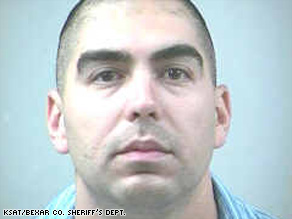
(CNN) -- An Air Force nurse has been charged with murdering three terminally ill patients by giving them fatal overdoses, the Air Force said Tuesday.
Capt. Michael Fontana is continuing to work at Wildford Hall Medical Center.
Capt. Michael Fontana, a nurse at Wilford Hall Medical Center at Lackland Air Force Base in San Antonio, Texas, also was charged Monday with conduct unbecoming an officer for changing a medical document.
"The charges are the result of an Air Force investigation that occurred after irregularities were discovered in Capt. Fontana's administration of medications which may have resulted in the death of an end-of-life patient," hospital spokesman David Smith told reporters.
The nurse was charged with three counts of violating Article 118 of the Uniform Code of Military Justice. "It is considered murder," Smith said.
After an Article 32 hearing, akin to a civilian grand jury proceeding, the commander will decide whether the case goes to court-martial.
The three deaths occurred in July, Smith said. He cited the privacy act in refusing to divulge the suspect's age and hometown.
He said he did not know the motive but was confident no other patients were victimized.
"We know that there are no other patients involved in this case," he said.
Fontana, an intensive-care unit nurse who has been working at the hospital since 2006, the year he joined the Air Force, has been released on his own recognizance and is continuing to work at the hospital, though he is no longer involved in patient care, Smith said.
"As far as we can tell, he has been an exemplary nurse," Smith said.
Fontana also served as a nurse at the Air Force Theater Hospital in Balad, Iraq, Smith said. His work there was investigated, "and there was nothing found," he said.
A call to a San Antonio phone number listed as belonging to Michael Fontana got a message that said, "Thank you for calling. Due to the ongoing investigation, I have no comment for you right now, but I do appreciate your call and will talk to you soon."
Relatives of the dead patients have requested privacy, the Air Force said.
Wilford Hall Medical Center is the Air Force's largest medical facility.
Vocollect's device has health-care workers talking

Businesses that launched new products in late 2007 could start their own survivor's club today, with monthly meetings convened around a mid-sized dining table.
In that elite club, one seat should be reserved for Vocollect Healthcare Systems in Wilkins, which Â-- counter to the economic times -- saw its sales more than triple last year.
The company's product is a voice-assisted care device that, to an outsider, looks a lot like the headsets worn by the counter help at fast-food restaurants.
But Vocollect's device, called AccuNurse, is more -- a voice-activated portable system that provides nursing home aides with information on their residents as they work while also capturing data to ensure the nursing home gets proper reimbursement.
When it debuted, AccuNurse was sold in two states. Now it is available in 23.
"There's enormous opportunity for us, so we have pretty high expectations for this company," said James Quasey, president of the firm.
He makes the case that AccuNurse has a number of benefits: It helps ensure nursing home residents get proper care at the proper time; it streamlines the work day for aides, who no longer have to keep handwritten records or sit through shift-change meetings; and it makes sure the nursing home captures the full reimbursement.
"It is a system that pays for itself within months," Mr. Quasey said.
In 2005, Roger Byford, chairman and CEO of Vocollect Healthcare's parent company, visited the small Virginia company that developed the system. "It was very clear to me that it was a great application for the technology," he said.
So he bought AccuNurse and brought it back to Pittsburgh, where Vocollect technicians spent 18 months building a second generation model that is more powerful, smaller, more ergonomically designed and less expensive.
They put special emphasis on top-drawer voice recognition software, knowing that garbled messages lead to intolerable delays and mistakes. And they made sure potential customers would see the financial benefit.
Among its local customers are UPMC's skilled nursing facilities, which, in an article in Nursing Homes magazine last year, reported increased reimbursement due to improved documentation and dramatic declines in staff turnover. Within three months, the system had paid for itself, according to the article.
Last month, St. John Specialty Care Center in Mars took some of its units fully online. Executive Director Tom Prickett said, "We're very pleased with it." Judy Hon, assistant director of nursing, said staff members feel empowered, knowing when they walk into a resident's room they actually have a handle on everything that resident needs.
Because workers can page each other through the headset, rather than an intercom, noise levels in the facility have gone down, too.
Vocollect officials keep pricing and revenue figures private, but they are clearly optimistic about the company's future. While potential 10 percent to 20 percent annual growth would make most companies swoon, "that would be short of our expectation, that's for sure," Mr. Quasey said.
With 45 employees, Vocollect Healthcare is only one-tenth the size of its parent, Vocollect Inc., which sells voice-activation systems for use in warehouse distribution. With many of its customers in the retail sector, the economic downturn has hit Vocollect Inc., forcing the company to lay off 65 workers in November.
"We expect both businesses to grow," said Mr. Byford, but in five years he hopes the parent is only two to three times bigger than Vocollect Healthcare, a wholly-owned subsidiary.
There are 17,000 nursing homes in the United States, he noted. The company also is already exploring the possibilities of adapting the application to hospital settings.
"It's not just that we're growing in a slow economy," Mr. Quasey said. "It's that we're helping people."
Steve Twedt can be reached at stwedt@post-gazette.com or 412-263-1963.
First published on March 17, 2009 at 12:00 am


